
The Origin of “OK”: How Two Letters Became the World’s Most Universal Word
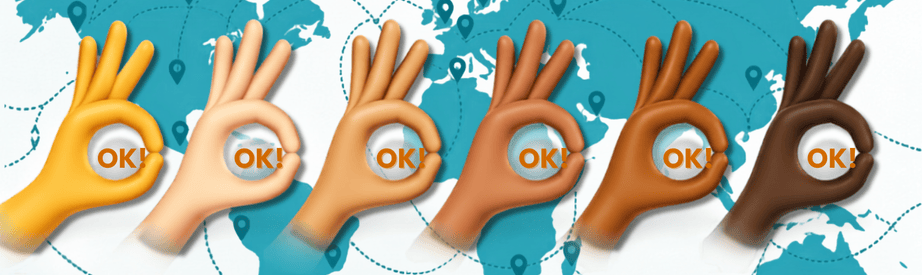
“O.K.”
Whether you’re sending an email, approving a document, replying to a text message, or ending a meeting, chances are you’ve used OK today. It’s only two letters, yet it’s understood in boardrooms, airports, classrooms, cafés, construction sites, and countless other places around the globe.
Few English words have traveled as far and become as universally recognized as OK. But where did OK come from, and how did it become one of the world’s most common words?
A Humorous Beginning
The history of OK begins in Boston in 1839.
On March 23, 1839, the Boston Morning Post published the abbreviation “O.K.” as shorthand for “oll korrect,” an intentionally misspelled version of “all correct.” At the time, humorous abbreviations and deliberate misspellings were a popular trend in American newspapers.
Like many popular expressions, it could easily have disappeared. Instead, OK found something far more valuable than popularity: usefulness.
Why “OK” Spread Around the World
The success of OK wasn’t driven by governments, dictionaries, or language academies. It spread because it solved a practical communication problem.
It was:
- Short
- Easy to pronounce
- Easy to recognize
- Instantly understood
Most importantly, it communicated approval, agreement, or confirmation without requiring lengthy explanations.
These qualities made it ideal for fast communication. Telegraph operators adopted OK because every character mattered. Businesses used it to approve documents and transactions. Politicians helped popularize it through campaign slogans. As international trade expanded and English became increasingly influential in global business, OK traveled with it.
As international trade expanded and American influence grew during the twentieth century, radio, films, television, and eventually the internet helped make OK one of the world’s most recognizable words.
A Word Without Borders
Today, OK is recognized in countries where English isn’t the primary language. Whether you’re confirming a meeting in Sweden, acknowledging instructions in Peru, or replying to a message from Japan, chances are the other person understands exactly what you mean.
That’s a remarkable achievement for a word that started as a newspaper joke nearly two centuries ago.
Why Didn’t Other Countries Translate “OK”?
One of the reasons OK became so universal is that most languages never translated it; they simply adopted it. Where local variations exist, they’re usually phonetic spellings rather than completely new words.
| LANGUAGE | SPELLING |
| Swedish | Okej |
| Norwegian | Okei |
| Dutch | Oké |
| Indonesian | Oke |
| Turkish | Okey |
| Japanese | オーケー |
| Korean | 오케이 |
This allowed the word to fit naturally into local languages while preserving its original meaning. Few English words have achieved that level of global recognition.
One Word, Many Meanings
Ironically, one of the world’s most universal words is also one of its most context-dependent.
Depending on how it’s spoken, OK can:
- Express agreement.
- Confirm understanding.
- Reassure someone.
- Answer the question, “How are you?”
- Ask for confirmation (“OK?”).
- Signal hesitation.
- Politely end a conversation.
For people, tone of voice usually makes the intended meaning obvious, but for technology, it’s not always that simple.
What “OK” Teaches Us About Transcription
After transcribing countless interviews, meetings, and podcasts, I’ve noticed something interesting: regardless of the speaker’s accent or nationality, OK is one of the few words almost everyone uses. Ironically, it’s also one of the easiest words to misunderstand.
Modern AI transcription systems usually recognize the word itself. The real challenge is determining why it was said.
- Was it an agreement?
- A filler word?
- A request for confirmation?
- A sign of hesitation?
Without punctuation, speaker intent, or surrounding context, the meaning can easily change.
That’s where human quality assurance adds value. Professional transcription services aren’t simply about converting speech into text; it’s about preserving meaning. A single word like OK can influence how a meeting, interview, or customer conversation is interpreted long after the recording has ended.
Final Thoughts
Nearly two centuries after its first appearance in a Boston newspaper, OK remains one of the most successful exports of the English language.
It crossed borders without needing translation, adapted to dozens of languages without losing its identity, and continues to connect people in everyday conversations, international business, and digital communication.
Not bad for two letters that started as a joke!
Sources & Further Reading
Merriam-Webster — OK Definition & Meaning: Word History
Oxford Learner’s Dictionaries — OK Word Origin
Boston Morning Post, March 23, 1839 — first known printed appearance of “O.K.”